
Genre · Jazz · United States, late 1920s
Swing
Where to start with swing music
Swing grew out of New Orleans jazz in the late 1920s and became the sound of America's dance halls by the mid-1930s. Big bands of a dozen or more players set the horn sections against each other in short repeated phrases called riffs, over a steady four-beats-to-the-bar pulse.
It was the pop music of its day. Singers fronted the bands, and many of the songs now called the Great American Songbook were swing hits first.
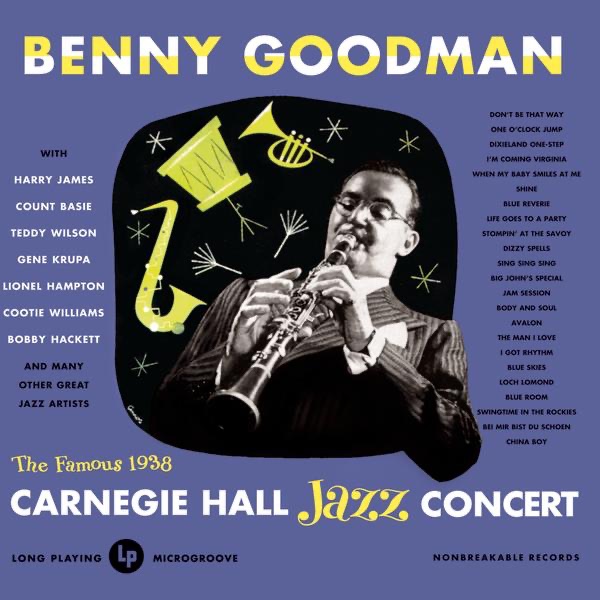
Swing at its most famous: a live record of the night the music of the dance halls was played in a concert hall.
Part of Big band →Where to start: 8 swing albums, in order
Click a cover to hear 30-second previews. Start at the top; each record takes you a little further.
- 01
The Famous 1938 Carnegie Hall Jazz Concert
Recorded live in January 1938, the night swing played Carnegie Hall. 'Sing, Sing, Sing', with Gene Krupa on drums, is the reason to press play.
Big band  02
Ellington at Newport
Paul Gonsalves' 27-chorus tenor solo on 'Diminuendo and Crescendo in Blue' set the festival crowd on its feet and revived Ellington's career.
Big band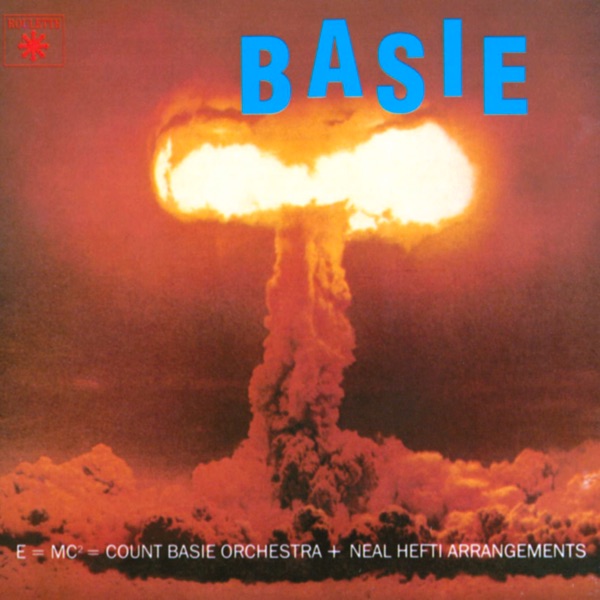 03
The Atomic Mr. Basie
Basie's band at its tightest, playing Neal Hefti's arrangements. Swing doesn't get much cleaner than this.
Big band 04
Ella Fitzgerald Sings the Cole Porter Songbook
Ella and an orchestra work through Cole Porter's songs: the vocal side of swing, and a tour of the standards.
Vocal jazz 05
Songs for Swingin' Lovers!
Sinatra with arranger Nelson Riddle; 'I've Got You Under My Skin' shows how a swing band lifts a singer.
Vocal jazz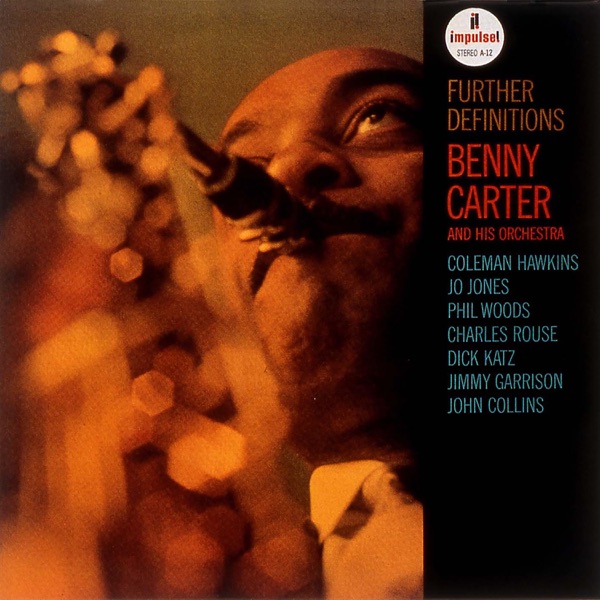 06
Further Definitions
Benny Carter writes for four saxophones, Coleman Hawkins among them, moving as one section: swing harmony made new.
 07
Gettin' Together!
The Ellington tenor star in a small group, relaxed and warm.
 08
The Last of the Blue Devils
Kansas City swing and blues piano from the bandleader who hired a young Charlie Parker, recorded late in his career.
Kansas City jazz
Previews courtesy of Apple Music.
Which one did you like best? Its tag below the cover is the branch to dig into next.
Where swing came from, and where it went
Swing came out of Dixieland and the early big bands, with blues and ragtime underneath. After the war the dance halls emptied, and its players carried it two ways: small groups into bebop, and the big-band sound into cool jazz and, much later, the swing revival of the 1990s.
Other branches of jazz
Each has its own albums and lineage. Or go back to the jazz page for the whole picture.
 1940sBebopFast tempos, twisting melodies, solos packed with notes.8 albums · open →
 1940sCool jazzA softer tone, relaxed tempos, careful arrangements.8 albums · open →
 1950sHard bopBebop with more blues and gospel in it: punchy and soulful.8 albums · open →
 1950sModal jazzLong, open grooves built on scales; spacious and hypnotic.8 albums · open →
 1960sFree jazzNo fixed chords or steady beat: raw, collective improvisation.8 albums · open →
 1960sJazz fusionElectric keyboards and bass, rock and funk rhythms.8 albums · open →
Go deeper
What we have written about swing, newest first.
See swing on the genre map
Its place among more than 1,200 genres, next to its neighbors.
Open the genre map →
Keep digging swing in Cratto
Scan your records, light up your own genre globe, and see how much of your shelf is swing.
Get Cratto →Genres swing directly influenced17
Genre names and classification follow Wikipedia (Swing music, List of music genres and styles), CC BY-SA 4.0; lineage lines follow the stylistic origins each genre's entry records. Album artwork and previews come from Apple Music.