
Introduction
Walk into a hotel lobby or a coffee shop and you will often hear a Miles Davis record, or a lazy stretch of bossa nova, the jazz-tinged light music of Brazil. Nobody is really listening. Yet that little bit of sound makes the whole place feel respectable, relaxed and tasteful. Mention jazz today and one word comes to most people's minds: classy.
A hundred years ago people thought the exact opposite. In August 1921 the American Ladies' Home Journal ran an article titled "Does Jazz Put the Sin in Syncopation?" Syncopation is the signature rhythm of jazz. It puts the accent on beats that would normally be weak.
At the time, many respectable families filed jazz alongside brothels, liquor and late-night dance halls. It was something to keep the children away from. The historian Neil Leonard went through the newspapers and magazines of that era. He found that the guardians of tradition called jazz vulgar and lewd, and said its lyrics thinly veiled immoral ideas.
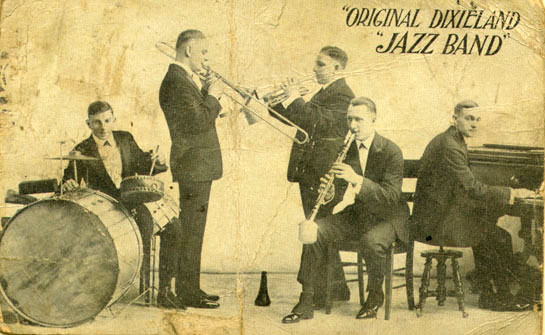
Over the next hundred years, though, the reputation of jazz turned completely around. Sinful or classy, both are labels people stuck on it. Neither has much to do with the music itself.
So how did the labels get stuck on?
The sociologist Howard Becker had a useful idea. When an act gets called "deviant", meaning judged to break the rules, or a work gets called "art", that is the result of a group of people dealing with one another.
Who gets the label, and how it gets applied, tells you more than the thing itself. This article borrows his way of seeing. It adds the French sociologist Pierre Bourdieu's work on taste and the findings of several jazz historians. Then it peels the labels off one by one to ask who put each one there, why, and what is left once it comes off.
My view is that there is nothing classy about jazz itself. The real pleasure you get when you listen to it matters more than any label.
1. Leaving the Dance Floor
The abuse did not last long. Quietly, the reputation of jazz improved. Leonard found that in the 1920s, whether a person rejected or accepted jazz lined up almost perfectly with that person's values. The more traditional someone was, the more they opposed it. The people who accepted jazz were often throwing off old rules too. As the old rules loosened, jazz slowly became respectable.
Much of that respectability came from bandleaders who pulled jazz toward the symphony. As early as 1923, the critic Gilbert Seldes pointed to bandleader Paul Whiteman's "symphonic jazz" as proof that jazz could be serious art.
Symphonic jazz meant adding strings and writing large-scale arrangements, so the music sounded more like something for the concert hall. By the late 1930s few people still attacked jazz in public, and many had begun to listen to it as art.
In 1938 Benny Goodman, the clarinetist and the most popular bandleader of the day, took his band into New York's Carnegie Hall, the temple of classical music.
But bands like Goodman's only visited Carnegie Hall once in a while. Their real home was the ballroom. From the 1930s into the early 1940s, the most popular music in America was swing. It was light and driving, always pushing forward, and perfect for dancing.
It was played by big bands: a dozen or more musicians, with sections of saxophones, trumpets and trombones, plus piano, bass, guitar and drums. Goodman, Count Basie and Duke Ellington all led big bands like this in the ballrooms. Hundreds or thousands of people danced the Lindy Hop below the stage, a fast partner dance that took off in Harlem. Jazz back then was America's pop music, and its first job was to get everyone dancing.
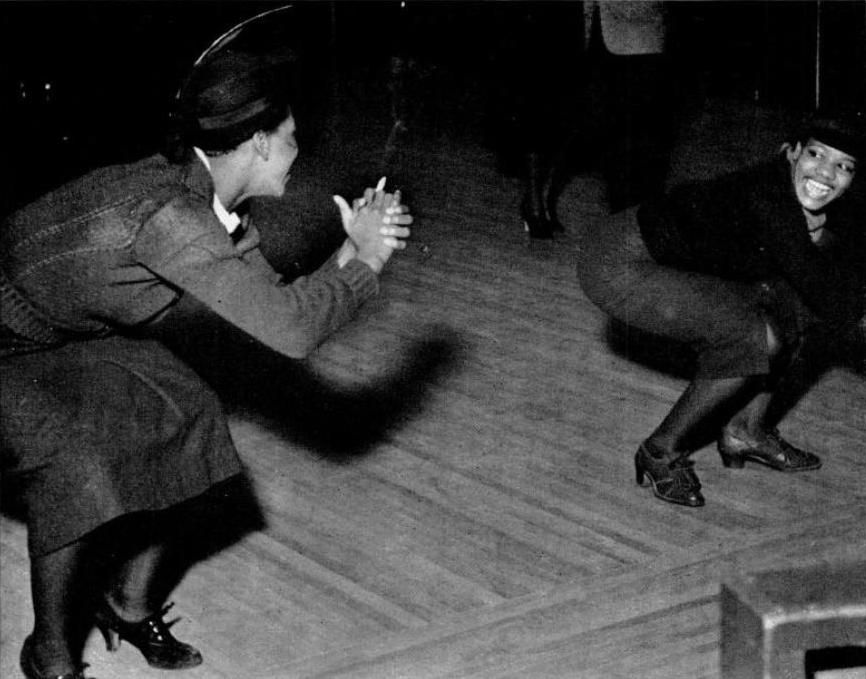
For the dancers, this was the best of times. The musicians on stage did not always agree. Big band charts were written in advance by staff arrangers, and a dozen-plus players read them off the page. When a solo came around, it often lasted only a few bars. The work was steady and the pay was decent, but there was little room to stretch out. However many ideas a player had, on stage he was just a cog in the band.
In the early 1940s some young musicians were no longer content to play from the page. When the big band gig ended, they went looking for places to play their own way. There were several such places. The most famous was Minton's Playhouse in Harlem, New York. Former bandleader Teddy Hill took over the club at the end of 1940. He had drummer Kenny Clarke put together a house band, with Thelonious Monk on piano. Alto saxophonist Charlie Parker, trumpeter Dizzy Gillespie and others came by often and improvised until dawn.
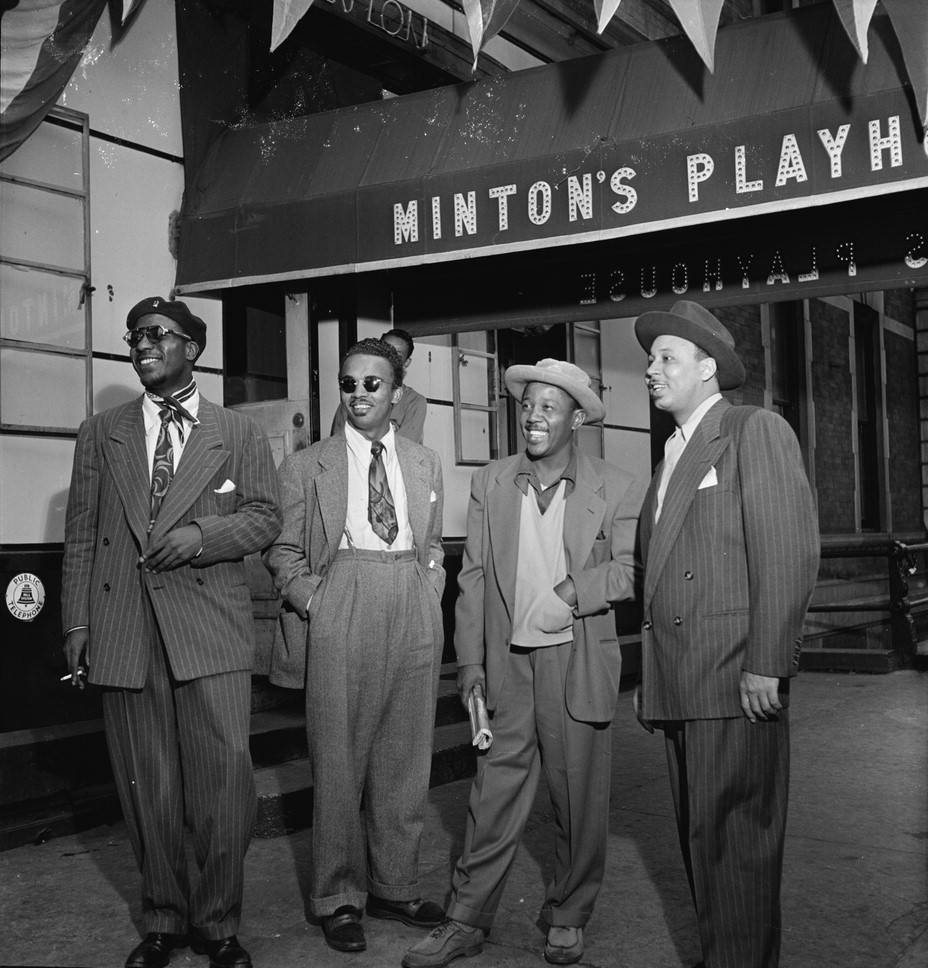
The music they worked out there came to be called bebop. It was blazingly fast, with dense, twisting chords and melodies that leapt up and down. The band shrank to four or five players. You could not dance to it. The audience had to sit and listen, eyes on the stage, ears following whoever was soloing.
If leaving the dance floor for bebop was the key turning point in jazz, the biggest change was in what the music was made for. Swing aimed at the dance floor. As long as the crowd was dancing happily, the job was done. Bebop aimed at the musicians themselves, who wanted to push their skill and ideas as far as they would go. Music had been a handy tool. With bebop it became a way for one person to express himself in front of others.
The philosopher Hannah Arendt divided human activity into several kinds. Two of them make a neat comparison. One she called "work": making a thing from a blueprint for others to use.
The other she called "action": appearing in front of others and letting them see who you are, with an outcome no one can design in advance. The big band arrangement sits close to the first. Bebop improvisation sits close to the second.
Looking back, most jazz historians treat bebop as the watershed. Bernard Gendron argues that bebop is what set jazz on its way out of entertainment music and toward art music, and that afterward jazz held an almost "sacred" place in American culture. Scott DeVeaux puts it more bluntly. In the jazz histories written later, bebop is the "keystone": "with bebop, jazz finally became an art music."
2. No Longer Entertainers
Besides the music, the bebop players also set out to change who they were on stage.
In that era, a Black musician on stage was often expected to play a likable role: grin, clown around, keep the white audience amused. American show business has a long and shameful history on this. The bebop generation hated it. They wore suits and berets, and on stage they just played, paying the audience little attention. Miles Davis later often turned his back to the audience while others soloed.
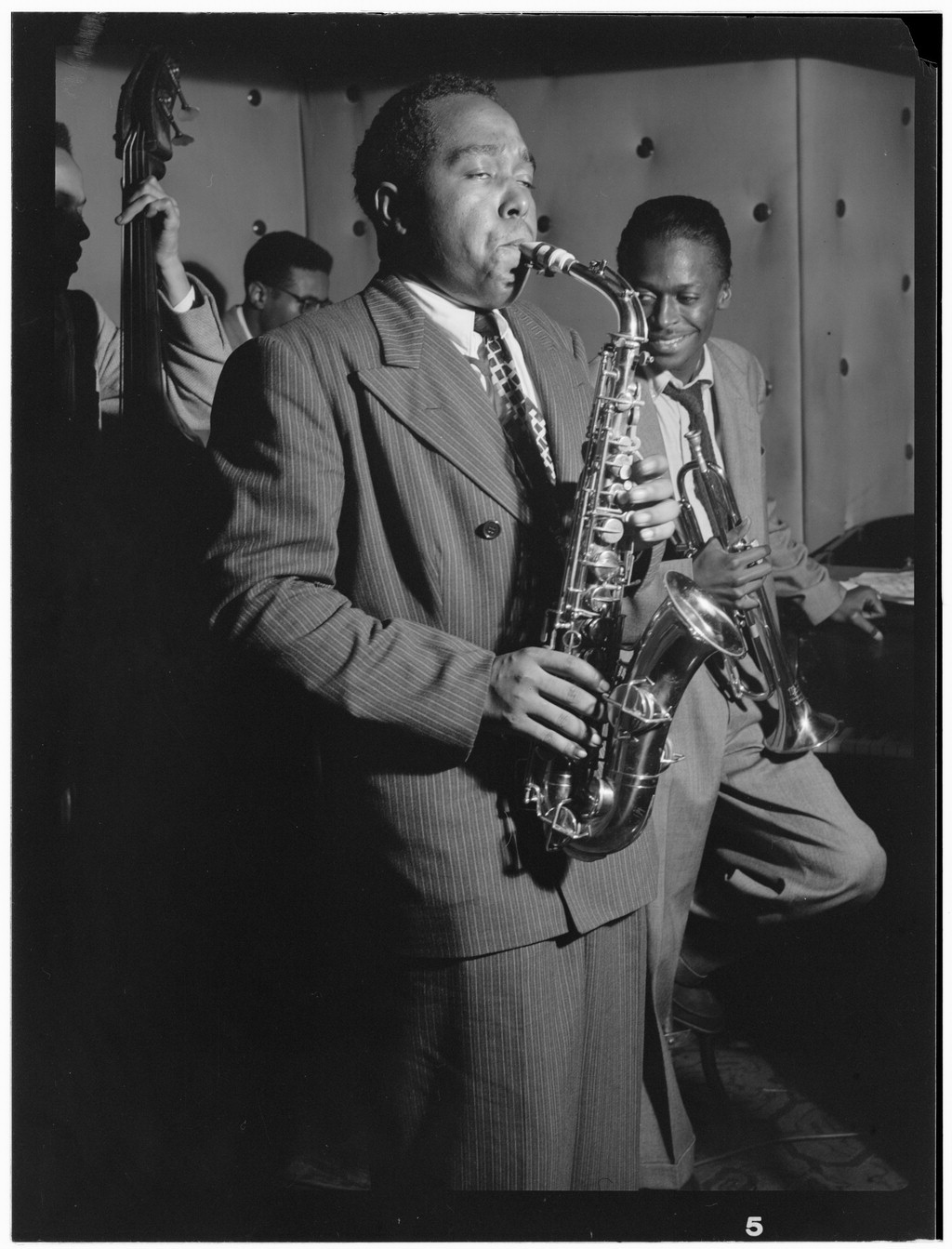
On stage, Black musicians had to smile for the crowd. Off stage, they met limits everywhere. Segregation in the American South was written into law: Black and white people ate separately and rode separately. On tour, musicians often played in a hotel they could not stay in, and had to come and go through the back door. The North had no such laws on the books, but the same snubs were common.
From the 1950s the civil rights movement began demanding an end to segregation, and musicians put that demand into their music. The word "freedom" went straight onto album titles. In 1958 tenor saxophonist Sonny Rollins released Freedom Suite and wrote a short statement on the sleeve. Its gist: American culture is deeply rooted in Black culture, yet Black people are still persecuted. Drummer Max Roach recorded We Insist! Freedom Now Suite in 1960. Its cover is a photo of young Black men staging a sit-in at a lunch counter. For them, refusing to serve as entertainment and fighting for human dignity were one and the same.
Musicians had to fight for dignity, but they also had to eat. The sociologist Becker saw this bind most clearly. As a young man he played piano in Chicago bars. In 1948 and 1949 he did fieldwork while he gigged, and later wrote it up as the fifth chapter of Outsiders. Mostly he wrote about ordinary musicians making a living in bars and dance halls, people whose hearts belonged to jazz. They called those in the know, like themselves, hip. Audiences who did not get it were square. In their eyes, squares did not understand music, requested nothing but corny tunes, and always wanted to tell the band how to play. But there was no way around it: the squares held the money. If they did not like what they heard, they would not come back, and the owner would hire someone else.
This left the musicians with a twisted attitude: I will take your money, but you do not understand, so you have no right to judge me. They could not call the shots economically, so they won the argument in their heads. The elitism of jazz grew out of this dependence. The more musicians relied on their audience, the higher the wall they built between themselves and it.
That wall went up on stage too. A widely told story about Minton's says that the players on the bandstand would deliberately use hard chord changes, breakneck tempos and unusual keys to keep out anyone who was not good enough and just wanted to sit in for fun. The line between hip and square was part of bebop from the start.
Taking the money while looking down on the people who pay it is common in the art world. Bourdieu called this "the economic world reversed". In an art world that prizes independence, selling well makes people suspicious, and being ignored by the market looks like proof of integrity. So among musicians, the worst insult was "sellout".
The musicians shut the squares out, and mainstream society treated the musicians as outsiders. The title of Becker's book, Outsiders, carries both meanings. To mainstream society, these night-owl, rule-breaking musicians were the outsiders. To the musicians, the squares who knew nothing about music yet kept telling them what to do were the real outsiders.
In the popular imagination, these "outsiders" were both dangerous and glamorous. Paul Lopes studied novels, films and news stories from the 1930s through the early 1960s. He found that jazz in them stood for class, race and the city, and that the musician was at once a romantic rebel and a dangerous deviant. These stories almost always ended in tragedy, and through those endings the mainstream norms got reaffirmed.
3. The People Who Spoke for It
Musicians could say "this is art", but society would not necessarily agree. What really raised jazz up was a large crowd of people who spoke for it.
Becker later wrote a whole book about this, Art Worlds. In his account, art is always made by many people working together. Composers, performers, instrument makers, venue owners, record labels, critics, schools, patrons and audiences all have to take part before a work gets called art. The job of critics and aestheticians is to explain to everyone why it counts as art. The story of jazz could almost serve as a footnote to this book. The sociologist Paul Lopes borrowed the idea of an "art world" and wrote an entire book on how jazz became art.
The first wave was the critics. In the 1930s the French critic Hugues Panassié wrote Le Jazz Hot (1934), one of the first books to treat jazz as serious music. Another critic, Charles Delaunay, compiled the most important early jazz discography (1936). Europeans studied jazz seriously even before Americans did. In the United States, Down Beat magazine, founded in Chicago in 1934, gradually built up a whole way of talking about jazz: which musicians mattered, which records were essential, what made a solo good.
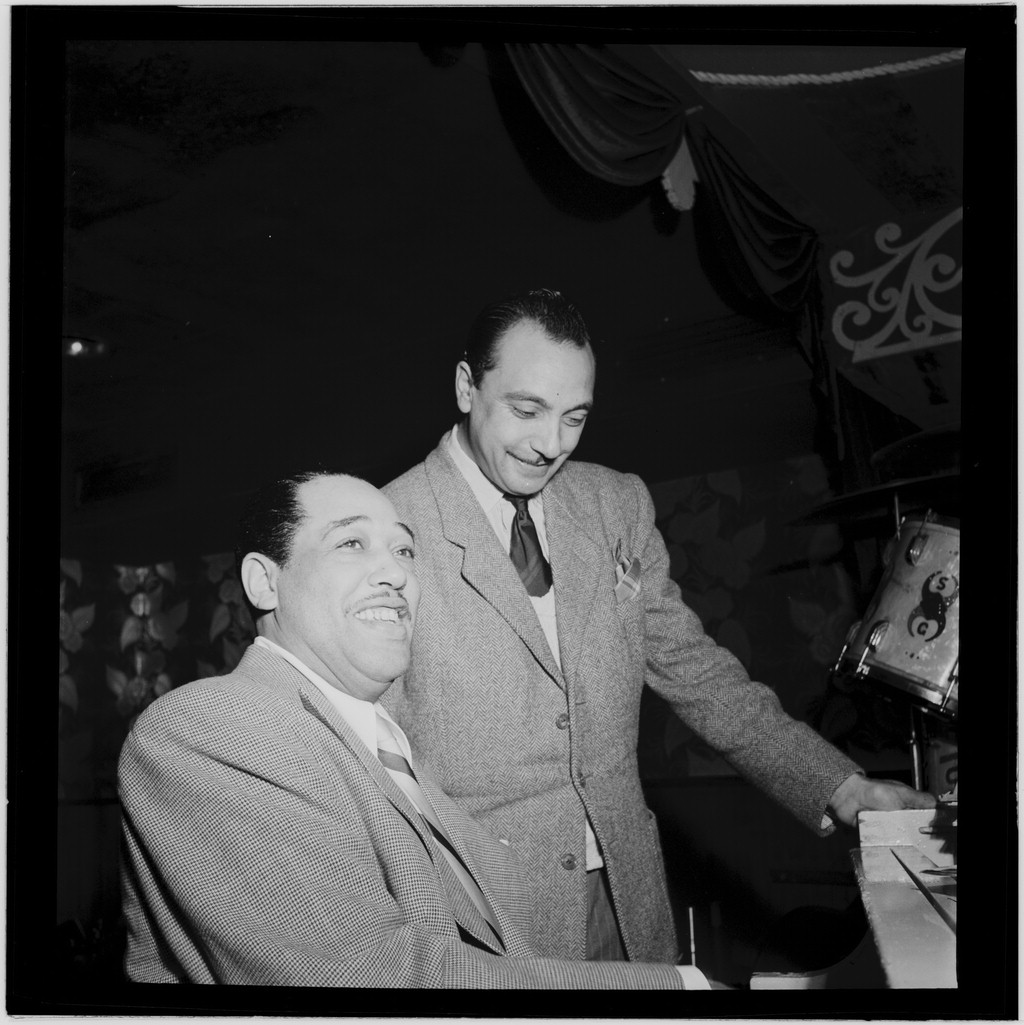
Who were these critics?
John Gennari wrote a history of American jazz criticism. He found that many of the most influential critics at mid-century were record collectors with elite educations, among them Marshall Stearns, Nat Hentoff, Barry Ulanov and Martin Williams. They looked down on commercial fan culture and wrote jazz history with an eye for form and aesthetics, to prove that jazz deserved a place in the temple of culture that liberal education stood for. Lopes also describes a group of self-styled "serious" fans in the 1930s. They saw "real" jazz as a serious art under threat. They blamed the classical world for refusing to recognize it, the record industry for forcing it to go commercial, the audience for its ignorance, and swing musicians for selling out.
In the 1940s the critics fought two wars. First, the champions of swing traded insults with the New Orleans "revivalists", who wanted to go back to the old New Orleans jazz of the 1920s. In 1942 Metronome magazine gave the revivalists a nickname: "moldy figs". When bebop arrived, its supporters among the critics took on both of the other camps. Gendron argues that these fights produced a new aesthetic language, and only with it could bebop be understood as avant-garde art. In other words, the critics' talk was itself part of how jazz moved up.
DeVeaux goes further. The jazz history we read in textbooks today lines up the styles of different eras one after another like a family tree: New Orleans, swing, bebop, cool and hard bop, free jazz and fusion. He argues that this family tree was written after the fact. To win support, jazz needed to build up "cultural capital", and a lineage proving it was an "autonomous art" served that purpose well. Who made it into the family tree, and who did not, was a matter of selection too. In the 1950s, as jazz tried to move closer to classical music, the price was shedding some of its African American traits.
Once the critics had written the family tree, institutions brought it into the classroom and onto the festival stage. In 1947 a university in North Texas started the first degree program in jazz. Jazz now had textbooks and course credits. In 1954 the Newport Jazz Festival opened in a wealthy summer resort in Rhode Island, and jazz stepped onto the lawns of high society. Gennari's chapter on the 1950s is titled "Swinging in a High-Class Groove". It describes how jazz won a "new mainstream respectability" in education and upscale entertainment.
Later still, the state stepped in. Starting in 1956, the U.S. State Department sent Dizzy Gillespie, Louis Armstrong, Dave Brubeck and others on tours around the world, using jazz to show off American freedom and energy. It was cultural diplomacy in the Cold War.
Critics like Stearns were also glad to describe jazz as "a triumph of interracial democracy in America". In 1987 the U.S. Congress passed a resolution declaring jazz a rare and valuable national treasure. That same year, New York's Lincoln Center, one of the most important performing arts centers in the country, started a jazz concert series. In 1996 Jazz at Lincoln Center became a full constituent there, a neighbor of the New York Philharmonic and the Metropolitan Opera.
In 1997 trumpeter Wynton Marsalis's jazz oratorio Blood on the Fields won the Pulitzer Prize for Music, the first jazz work to do so. DeVeaux warned that once jazz had degrees, archives and institutes, it also became "another kind of music", drifting further and further away from the popular music of the street.
Over these decades, not a single note of Parker's or Monk's recordings changed. What changed were the people gathered around those recordings. The historian Lawrence Levine told a very similar story. In nineteenth-century America, Shakespeare and opera were popular entertainment. Audiences heckled, cheered and shouted for actors to do a scene again. Step by step, these works were put on a pedestal. The theaters went quiet, ticket prices rose, and they became high culture. Jazz followed the same path. It left the dance floor and entered the concert hall, where the audience sat politely and listened.
Lopes ties the rise of jazz to this same thread. The line between highbrow and popular that elites drew in the late nineteenth century was exactly the door jazz later had to squeeze through.
This also shows that complex music and dazzling technique are not enough, on their own, to get a music raised up. Progressive rock has odd time signatures and long, sprawling structures too, yet mainstream critics found it pretentious. Heavy metal is fearsomely hard to play, yet in 1985 it was hauled into a U.S. Senate hearing. On the other hand, John Cage's 4′33″ (1952) has not a single note from start to finish, and it still made it into music history. What label a kind of music ends up with comes down to who stands around it. Whether the music is good has little to do with it.
To be fair, there is another side. Lopes argues that the fight for jazz to be seen as art was also Black musicians' fight for dignity, and the "first significant assault" on a cultural hierarchy built on elitism and racism. That side is real. But once consumer society took over the title of "art", things went sour. That is the next section.
4. Classy Today
Today, that jazz is classy is close to common knowledge. Tell someone you listen to jazz, and odds are you will hear "you have good taste." But there is one more step between "art" and "classy", and it was taken later than many people think.
The 1980s: Jazz Becomes a Sign of Wealth
The film scholar Krin Gabbard noticed that from the early 1980s, jazz in films and ads more and more often stood for elegance and wealth. Before that, it rarely carried that meaning.
The musicologist Justin Williams laid out a whole table of evidence from the 1980s. In both 1983 and 1984, Marsalis won Grammys in jazz and classical in the same year. The hit sitcom The Cosby Show tied jazz to an upper-middle-class Black family. Ads for Chase Manhattan Bank, American Express, Infiniti and Diet Coke used jazz to signal a respectable life. In 1988 YSL even launched a men's fragrance called JAZZ. There was also the jazz score of the Japanese anime Cowboy Bebop.
By the early 1990s, when hip-hop groups like A Tribe Called Quest used acoustic bass and horns in their work, critics immediately praised them as "more intelligent". That set them above gangsta rap and its street violence in one stroke.
Williams concludes that these jazz sounds became "markers of class" in rap. Once jazz became a sign, anyone could use it. Today's sense of class grew out of this. Look closely and it has two sources: one is borrowed, the other belongs to the in-crowd.
Borrowed Class
The class most people feel comes from where jazz is played: hotel lobbies, specialty coffee shops, wine bars, real estate ads. These places borrow the reputation jazz built up over decades, and the customers who sit down in them borrow a little from the places in turn. Luxury brands do the same.
A 2025 study counted 2,000 Instagram posts tagged #luxurybrand. Of the 884 that had music, jazz made up 37.1 percent, the most of the five music categories the authors used.
This borrowing works remarkably well. In 1993 two consumer researchers ran an experiment in a wine shop. When the shop played classical music, customers chose noticeably more expensive wine.
A 1997 study in Nature found something even more direct. When a store played French accordion music, more French wine sold. When it switched to German beer-hall music, more German wine sold.
In an experiment at a restaurant in Sydney, diners were willing to spend as much on a main course with jazz playing as with classical. Either way, they spent more than with easy listening or no music at all. Background music quietly changes how people see a place and the things sold there.
The French philosopher Jean Baudrillard said that what people pay for is not only the object but also what the object stands for. (I recommend his The Consumer Society.) Pair a cup of coffee with a song by trumpeter and singer Chet Baker and you are selling an extra helping of "taste".
The irony is that in these places jazz has become a tool again. Bebop fought hard to shed its role as a tool for dancing. Decades later it is background music for setting the mood. Only this time, it serves consumerism.
In China, an Extra Layer of Shine
When jazz arrived in Shanghai, it was a luxury item to begin with. In the 1930s Shanghai had fifty or sixty dance halls, most of them in hotels. There were almost no local jazz musicians, so the halls had to hire foreign bands. Over the years more than 500 foreign musicians came to the foreign concessions.
The top halls were the Paramount, the Ciro's and the Canidrome, and they all hired first-rate bands. One was the American trumpeter Buck Clayton and his Harlem Gentlemen, the house band at the Canidrome.
Andrew Field, a historian of Shanghai's dance halls, borrowed a phrase from the German thinker Walter Benjamin. He called these lavish, exotic halls in the concessions "dreamworlds of modernity".
Some in China disapproved at the time. Critics in the Republican era called the jazz-flavored shidaiqu of the composer Li Jinhui "yellow music", yellow being the Chinese color of smut. (Shidaiqu were the Mandarin pop songs popular in Shanghai then.) Critics on both the left and the right attacked it, in almost the same tone as that 1921 American article on "sin". In 1934 the Nationalist government launched the New Life Movement to clean up public morals. The press then argued over whether dancing was ruining the nation. The dance hall business responded with charity dance contests, Chinese-made goods and songs in Chinese, to prove that dancing could be patriotic too.
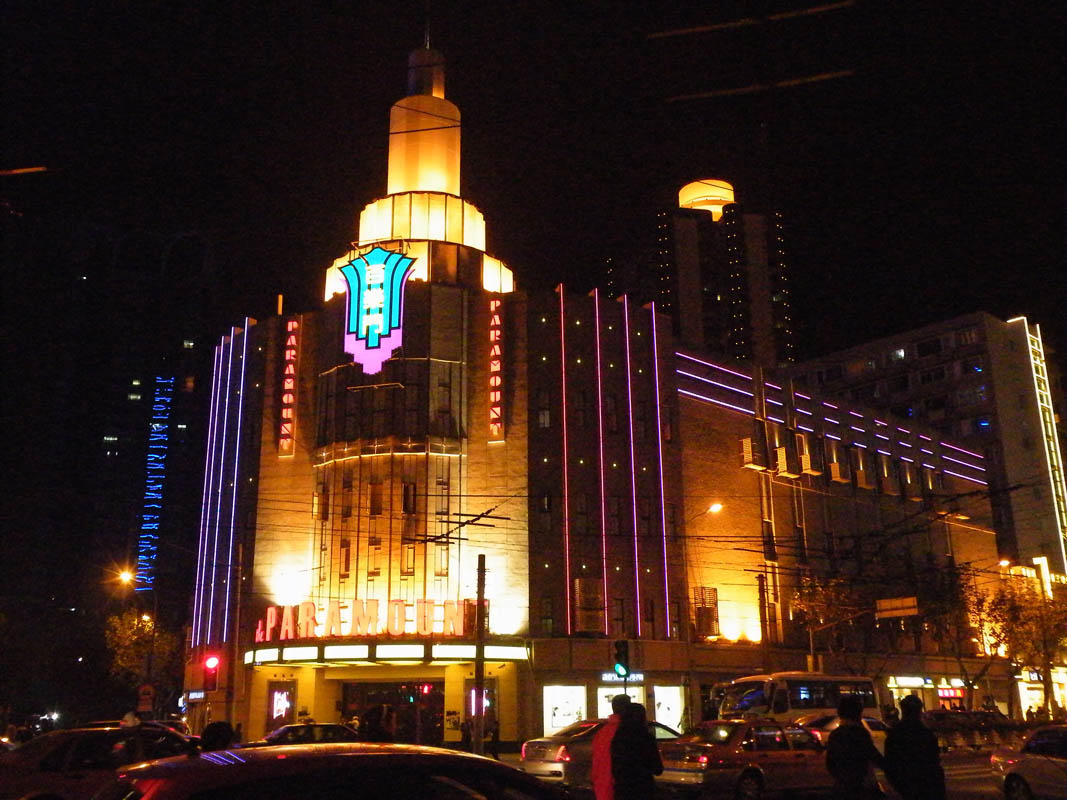
When jazz came back to Shanghai decades later, it moved into hotels again. By the mid-2000s several of the city's jazz venues were in luxury hotels such as the Hilton and the Portman Ritz-Carlton. The oldest was the jazz bar at the Peace Hotel on the Bund.
James Farrer and Andrew Field, writing on Shanghai nightlife, point out that today's Shanghai jazz scene mostly comes from international modern jazz and owes little to any local lineage. Yet the story of "Shanghai's jazz age" gives it a pedigree. Its "authenticity" rests half on the city's real history of cultural mixing and half on the myth of that history. Today jazz is close to standard equipment in all the "Old Shanghai" and "Republican-style" shops, which borrow exactly this pedigree. The authors also note an interesting contrast. Ballroom dancing came out of the same 1930s dance halls, but by the 1990s it had become a working-class pastime and lost its glow long ago. Jazz kept its glow the whole time.
Insider Class
The other kind of class belongs to people who really spend time listening.
In Distinction, Bourdieu explained that taste sorts people into groups. Understanding an art takes time, knowledge and the right upbringing, so what a person likes often gives away where they come from and how they were raised.
Seen through this lens, jazz ticks every box. It left the dance floor, so not everyone can dance to it anymore. To really follow it, a listener needs to know song forms, standards and who learned from whom. And the line between hip and square that musicians once drew on stage turned, along the way, into a line between those who get it and those who do not.
The numbers show it too. A 1992 survey by the National Endowment for the Arts found that 49 percent of live jazz audiences were college graduates, against only 24 percent of all adults.
People with household incomes over $50,000 were only 19 percent of adults but 32 percent of the jazz audience. DeVeaux, who wrote the report, used the term "cultural capital" outright. Jazz had moved into university music departments and concert halls, and knowing jazz was becoming part of American cultural capital.
The same report also has numbers pointing the other way. 54 percent of Black adults said they liked jazz, against only 32 percent of white adults. Jazz never became wholly the property of the elite.
Japan is another case. E. Taylor Atkins, a historian of jazz in Japan, writes that jazz kissa, coffee houses devoted to playing jazz records, were like temples. Customers were not allowed to talk and listened to the records in silence. As jazz turned into art music and left mass entertainment behind, its fans moved up the social ladder with it. He also notes that Japanese musicians who worked in Shanghai before the war came home worth a good deal more. In East Asia, the pedigree of jazz was tied from the very beginning to having seen the world.
Social identity theory explains the other side of this. People need to sort out "us" and "them" to know who they are. Psychologists at the University of Cambridge ran a study asking participants to guess what fans of different kinds of music were like, and people's impressions were strikingly similar.
The researchers argued that these stereotypes are socially constructed, and that music taste works like a badge people use to tell others who they are. Interestingly, in that British study it was classical music that was tied to the "white upper class". Jazz fans were seen only as friendly and emotionally stable. So the label "jazz = classy" is not stuck on the same way everywhere.
This sense of belonging helps people find their own kind. But like borrowed class, it is hollow. Listening slowly turns into taking a stance. Some people, afraid of being found out, force themselves through records they do not actually like. Others, when jazz comes up, compete over who knows more names and finer details of versions, and end up really listening less.
How the Two Push Each Other
The two kinds of class push each other along. Borrowed class spreads jazz into every corner of the city, until "I listen to jazz" no longer tells anyone apart. So the insiders move the line further in. First they compare which album you listen to. Then which version, then which pressing.
In 1904 the sociologist Georg Simmel wrote an essay called "Fashion" about exactly this cycle. The upper class sets itself apart with a taste. The masses copy it. The upper class moves on to another. The class of jazz has kept shifting in the same way. That wall between hip and square at Minton's has been rebuilt by someone or other for eighty years.
Coda: After the Labels Come Off
Looking back over these hundred years, the class of jazz was applied one layer at a time. There was the bit of self-respect musicians held on to while at the mercy of others. There was the family tree the critics wrote. There was the approval of schools, festivals and the state, the dream of wealth in 1980s ads, the borrowing by places of consumption, and the identity of the in-crowd. In China there is also the pedigree of Old Shanghai. Every layer really happened. Not one of them came from the music.
So there is nothing classy about jazz. Like any other music, some of it sounds good and some does not. Some people are spellbound by it and some cannot get into it. Both are perfectly normal.
Peel off the labels and what is left is the thing most worth caring about: the pleasure of listening. What moved people about bebop in the first place was a few musicians on stage improvising over the same chord changes, each one becoming himself in front of the others. If you hear that and it makes you happy, that is enough. You do not need it to prove who you are.
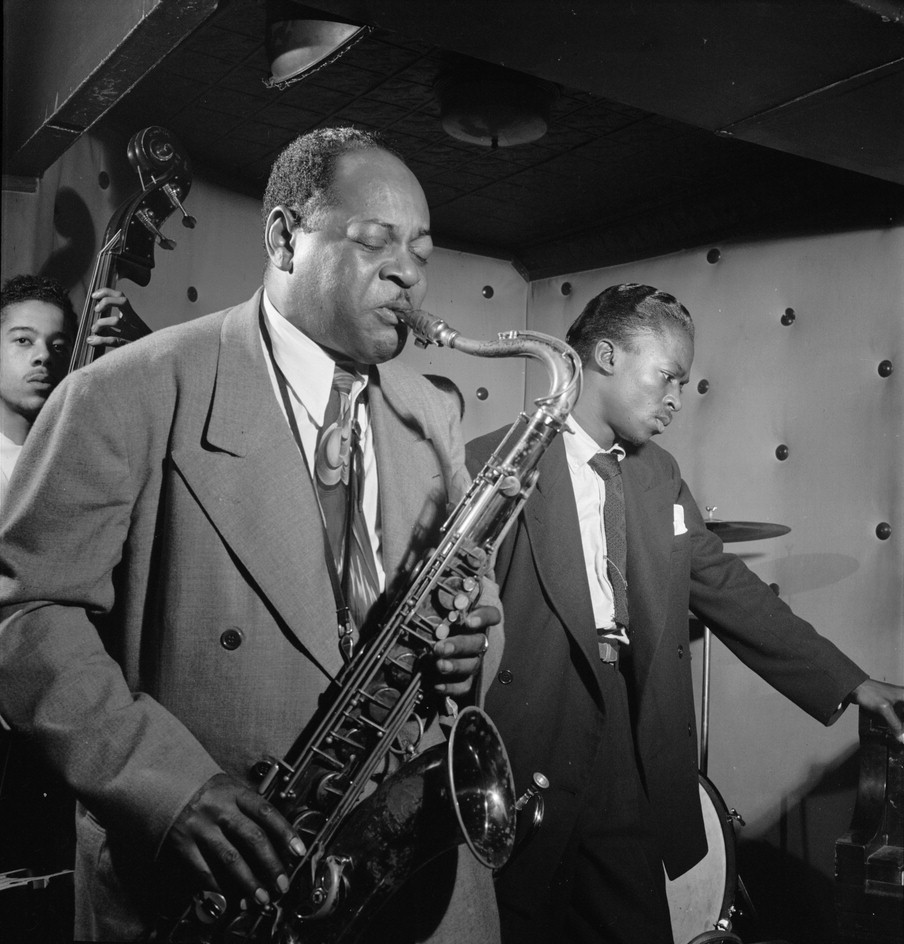
If you want to try, pick a standard, such as "Body and Soul", an old song nearly every jazz musician has played. First listen to the 1939 version by tenor saxophonist Coleman Hawkins, pictured above. Then listen to the version saxophonist John Coltrane recorded in 1960. One song, two players, two shapes. Hearing the difference is far more interesting than knowing it is "classy".
If you want to keep listening along these names, open our music genre map. Around the jazz node you will find bebop, cool jazz, hard bop and more, and many of these genres come with essential albums.
The books mentioned in this article are all good reads, if you want to go further:
-
Howard S. Becker, Outsiders: Studies in the Sociology of Deviance (1963). Chinese edition, translated by Zhang Moxue, Shanghai People's Publishing House, 2024.
-
Pierre Bourdieu, Distinction: A Social Critique of the Judgement of Taste (La Distinction, 1979). Chinese edition, translated by Liu Hui, The Commercial Press, 2015.
-
Paul Lopes, The Rise of a Jazz Art World (2002).
References
The research and historical facts in this article come from the sources below. Each fact and study was checked against them in October 2026.
Books and studies
- Areni, Charles S. & David Kim (1993). The Influence of Background Music on Shopping Behavior: Classical versus Top-Forty Music in a Wine Store. Advances in Consumer Research 20: 336–340.
- Arendt, Hannah (1958). The Human Condition. Chinese translation: 《人的境况》.
- Atkins, E. Taylor (2001). Blue Nippon: Authenticating Jazz in Japan. Duke University Press.
- Baudrillard, Jean (1970). La Société de consommation. Chinese translation: 《消费社会》.
- Becker, Howard S. (1963). Outsiders: Studies in the Sociology of Deviance. Free Press. Chinese translation: 《局外人:越轨的社会学研究》, trans. Zhang Moxue, Shanghai People's Publishing House, 2024.
- Becker, Howard S. (1982). Art Worlds. University of California Press.
- Bourdieu, Pierre (1979). La Distinction: Critique sociale du jugement. Éditions de Minuit. Chinese translation: 《区分:判断力的社会批判》, trans. Liu Hui, The Commercial Press, 2015.
- Bourdieu, Pierre (1983). The Field of Cultural Production, or: The Economic World Reversed. Poetics 12(4–5): 311–356.
- DeVeaux, Scott (1991). Constructing the Jazz Tradition: Jazz Historiography. Black American Literature Forum 25(3): 525–560.
- DeVeaux, Scott (1995). Jazz in America: Who's Listening? NEA Research Division Report #31. Seven Locks Press.
- Farrer, James & Andrew David Field (2015). Shanghai Nightscapes: A Nocturnal Biography of a Global City. University of Chicago Press.
- Faulkner, Anne Shaw (1921). Does Jazz Put the Sin in Syncopation? Ladies' Home Journal, August 1921.
- Field, Andrew David (2010). Shanghai's Dancing World: Cabaret Culture and Urban Politics, 1919–1954. Chinese University Press.
- Gabbard, Krin (1996). Jammin' at the Margins: Jazz and the American Cinema. University of Chicago Press.
- Gendron, Bernard (2002). Between Montmartre and the Mudd Club: Popular Music and the Avant-Garde. University of Chicago Press.
- Gennari, John (2006). Blowin' Hot and Cool: Jazz and Its Critics. University of Chicago Press.
- Jones, Andrew F. (2001). Yellow Music: Media Culture and Colonial Modernity in the Chinese Jazz Age. Duke University Press. Chinese translation: 《留声中国:摩登音乐文化的形成》, trans. Song Weihang, Taiwan Commercial Press, 2004.
- Leonard, Neil (1962). Jazz and the White Americans: The Acceptance of a New Art Form. University of Chicago Press.
- Levine, Lawrence W. (1988). Highbrow/Lowbrow: The Emergence of Cultural Hierarchy in America. Harvard University Press.
- Lopes, Paul (2000). Pierre Bourdieu's Fields of Cultural Production: A Case Study of Modern Jazz. In Nicholas Brown & Imre Szeman (eds.), Pierre Bourdieu: Fieldwork in Culture, 165–185. Rowman & Littlefield.
- Lopes, Paul (2002). The Rise of a Jazz Art World. Cambridge University Press.
- Lopes, Paul (2005). Signifying Deviance and Transgression: Jazz in the Popular Imagination. American Behavioral Scientist 48(11): 1468–1481.
- Marlow, Eugene (2018). Jazz in China: From Dance Hall Music to Individual Freedom of Expression. University Press of Mississippi.
- North, Adrian C., David J. Hargreaves & Jennifer McKendrick (1997). In-store Music Affects Product Choice. Nature 390: 132.
- Rentfrow, Peter J., McDonald & Oldmeadow (2009). You Are What You Listen To: Young People's Stereotypes about Music Fans. Group Processes & Intergroup Relations. University of Cambridge press release.
- Sabuncuoğlu İnanç, Ayda, Ebru Gökaliler & Ezgi Saatcıoğlu (2025). The Sound of Luxury: A Content Analysis of Hashtagged Luxury Brand Posts and Their Music on Social Media. Online Journal of Music Sciences 10(2): 175–189.
- Simmel, Georg (1904). Fashion. International Quarterly 10(1): 130–155.
- Tajfel, Henri & John Turner (1979). An Integrative Theory of Intergroup Conflict. In W. G. Austin & S. Worchel (eds.), The Social Psychology of Intergroup Relations, 33–47.
- Williams, Justin A. (2010). The Construction of Jazz Rap as High Art in Hip-Hop Music. Journal of Musicology 27(4): 435–459.
- Wilson, Stephanie (2003). The Effect of Music on Perceived Atmosphere and Purchase Intentions in a Restaurant. Psychology of Music 31(1).
Other facts
- Minton's Playhouse; The dispute over Miles Davis turning his back on audiences; We Insist!
- Hot Club de France; Down Beat; The University of North Texas jazz program; Newport Jazz Festival
- The 1956 "Jazz Ambassadors" tours; H.Con.Res. 57 (1987); Jazz at Lincoln Center; 1997 Pulitzer Prize for Music
- Record of the 1985 Senate hearing; The Paramount, Shanghai
Image credits
- Original Dixieland Jazz Band promotional card, public domain
- Dancing at the Savoy Ballroom, 1936, public domain
- Minton's Playhouse, 1947, Three Deuces, 1947, Aquarium, 1946, Coleman Hawkins and Miles Davis, 1947: photos by William P. Gottlieb, Library of Congress, in the public domain at the photographer's wish
- The Paramount, Shanghai, photo by Tksteven, CC BY-SA 3.0


