
Genre · Jazz · New York, late 1950s
Modal jazz
Where to start with modal jazz
Modal jazz builds tunes on scales, or modes, rather than fast-moving chords, so a soloist can stay with one sound for a long time and explore it. Miles Davis tried it on Milestones in 1958 and made it famous with Kind of Blue a year later.
At slow tempos the music feels open and unhurried; at fast ones it turns hypnotic and intense. John Coltrane, McCoy Tyner, Herbie Hancock and Wayne Shorter carried it through the 1960s.
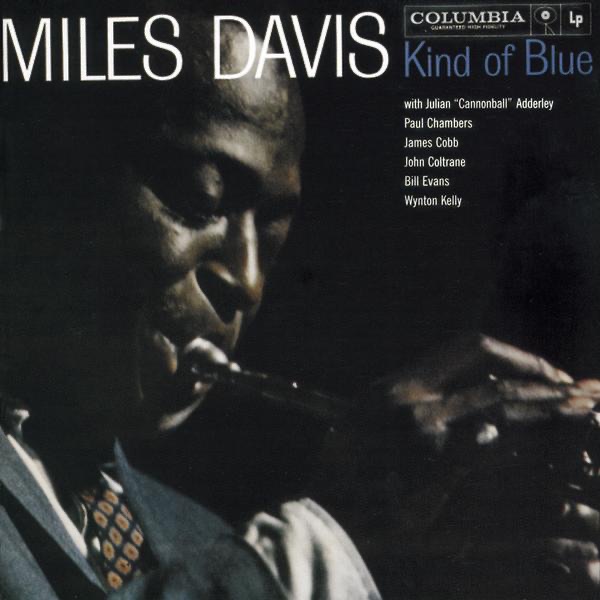
The album that made modal jazz famous, and the best-loved record in all of jazz.
Where to start: 8 modal jazz albums, in order
Click a cover to hear 30-second previews. Start at the top; each record takes you a little further.
- 01
Kind of Blue
The record that made modal jazz famous: slow, open tunes where every soloist has room to think.
 02
Milestones
The first step: the title track runs on two scales instead of a chain of chord changes.
Hard bop 03
Maiden Voyage
Hancock's album about the sea: floating, spacious and easy to sink into.
Post-bop 04
My Favorite Things
Coltrane turns a Sound of Music song into a long soprano-sax trance over a repeating vamp.
 05
Speak No Evil
Wayne Shorter's dark, mysterious tunes: modal jazz as songwriting.
Post-bop 06
The Real McCoy
Coltrane's pianist leads his own quartet with Joe Henderson and Elvin Jones.
Post-bop 07
A Love Supreme
A four-part suite built on modal vamps and written as a prayer.
 08
Journey in Satchidananda
Alice Coltrane's harp, drones and Indian influence take modal jazz somewhere spiritual.
Avant-garde jazz
Previews courtesy of Apple Music.
Which one did you like best? Its tag below the cover is the branch to dig into next.
Where modal jazz came from, and where it went
Modal jazz came out of the hard bop bands of the late 1950s and drew on George Russell's theory of the Lydian Chromatic Concept. It opened the way to post-bop and spiritual jazz, and through Miles Davis's later bands, to fusion.
Other branches of jazz
Each has its own albums and lineage. Or go back to the jazz page for the whole picture.
 1930sSwing musicBig bands, a strong dance beat, riffs passed between the horns.8 albums · open →
 1940sBebopFast tempos, twisting melodies, solos packed with notes.8 albums · open →
 1940sCool jazzA softer tone, relaxed tempos, careful arrangements.8 albums · open →
 1950sHard bopBebop with more blues and gospel in it: punchy and soulful.8 albums · open →
 1960sFree jazzNo fixed chords or steady beat: raw, collective improvisation.8 albums · open →
 1960sJazz fusionElectric keyboards and bass, rock and funk rhythms.8 albums · open →
See modal jazz on the genre map
Its place among more than 1,200 genres, next to its neighbors.
Open the genre map →
Keep digging modal jazz in Cratto
Scan your records, light up your own genre globe, and see how much of your shelf is modal jazz.
Get Cratto →Genres modal jazz directly influenced1
Genre names and classification follow Wikipedia (Modal jazz, List of music genres and styles), CC BY-SA 4.0; lineage lines follow the stylistic origins each genre's entry records. Album artwork and previews come from Apple Music.