
On 5 October 1948, an audience at a concert in Paris heard no band at all. What they heard were recordings: a train whistle, the rhythm of wheels on rails, cut up, looped and put back together in a new order. The man behind it was Pierre Schaeffer, who ran an experimental studio at French national radio. One of the pieces that night was called Étude aux chemins de fer — Study with Railroads.
Some thirty years later, in Belleville, a small town about 30 miles from Detroit, three Black teenagers at the local high school used to turn the lights off and sit listening to records by Bootsy and Yellow Magic Orchestra. They went on to make techno.
"Electronic music" holds both of those scenes. One is the avant-garde studio music made at radio stations in Paris and Cologne; the other is the whole field of dance and listening music that branched off house and techno from the 1980s on. Instead of memorising a list, let's walk the two lineages together: first the origins, then the four-on-the-floor line and the breakbeat line. At the end there are 12 records you can play in order.
A map for your pocket
When you hear an electronic track you don't know, ask three questions and you will roughly know where it sits:
- How are the drums laid out? A kick on every beat (four-on-the-floor) points to house, techno, trance and hardcore. Sampled drums chopped and rearranged (breakbeats) point to jungle, drum and bass and dubstep.
- How fast is it? House runs about 115–130 BPM; techno and trance 120–150; drum and bass 165–185; hardcore 160–200 and up. Tempo alone halves the field.
- Does it want you to dance or to listen? The same machines make floor music (the EDM family) or headphone music (ambient, IDM, electronica).
Then keep two lineages in mind: four-on-the-floor (house → techno → trance → hardcore) and breakbeat (breakbeat hardcore → jungle → drum and bass → UK garage → dubstep). EDM and electronica are umbrellas rather than sounds; we will get to them.
Two origins: one recorded trains, the other built sound
Schaeffer's studio was founded at French national radio in 1942. In 1948 he formally began his "research into noises" there, and the five works premiered on 5 October that year — collectively Cinq études de bruits — were all made with phonographs. Soon he had a name for the approach: musique concrète. Instead of starting from notation, it starts from recorded, concrete sound. In 1951 he set up the Groupe de Recherches de Musique Concrète with Pierre Henry and the engineer Jacques Poullin.
Cologne took the other road. On 18 October 1951 the WDR Studio for Electronic Music was founded, with the composer Herbert Eimert as its first director. Among the participants was Werner Meyer-Eppler, who had first used the term "electronic music" in 1949. Cologne did not record the real world; it built sound electronically. In March 1953 Karlheinz Stockhausen joined the studio and wrote his pure sine-tone pieces Studie I (1953) and Studie II (1954).
The two camps were openly opposed — real recorded sound against synthesised sound. The line blurred over time, and "electronic music" came to cover both. In the strict, academic sense it still means contemporary concert music made with electronic instruments or tape and impossible to perform without them, computer music included. In other words, electronic music began as a branch of contemporary composition; what most of us mean by the phrase today is the dance and listening music that came later.
The main genres at a glance
Keep this table as a quick reference. The sections after it walk through the genres one lineage at a time.
| Genre | Origin | Years | BPM guide | Rhythmic skeleton |
|---|---|---|---|---|
| Musique concrète | Paris | 1948– | — | No fixed pulse |
| Elektronische Musik | Cologne (WDR) | 1951– | — | No fixed pulse |
| Ambient | UK | 1970s | — | Often no clear beat |
| Synth-pop / technopop | Japan, Europe | Late 1970s | — | Songs plus sequencers |
| House | Chicago | Early 1980s | 115–130 | Four-on-the-floor |
| Acid house | Chicago | c. 1985–86 | 115–130 | Four-on-the-floor + TB-303 |
| Techno | Detroit | Mid-1980s | 120–150 | Four-on-the-floor |
| Trance | Frankfurt | Late 1980s–early 90s | 120–150 | Four-on-the-floor + long builds |
| Hardcore techno | Netherlands, Belgium, Germany | Around 1990 | 160–200+ | Distorted kick |
| Jungle | UK | Early 1990s | — | Breakbeats + reggae bass |
| Drum and bass | UK | Early–mid 1990s | 165–185 | Fast breakbeats |
| UK garage | London | Mid-1990s | about 130 | Shuffled / 2-step |
| Dubstep | South London | Early 2000s | — | 2-step + heavy bass |
| IDM | UK (Warp) | 1992– | — | Beats written for listening |
| Electronica / EDM | Umbrella terms | 1990s / 2010s | — | Varies; not a single sound |
The four-on-the-floor line: house, techno, trance and hardcore
It starts with a club. In 1977 a place called the Warehouse opened in the industrial zone on Chicago's West Side, and its resident DJ was Frankie Knuckles, who had moved over from New York. The crowd was mostly Black and gay, up to 2,000 people on a big night. Disco was fading, and to keep the floor going Knuckles began re-editing records — stretching the intros and breaks, laying drum-machine beats on top. The name "house" is generally traced to that club, and Knuckles came to be called the godfather of house. Jesse Saunders' "On and On" (1984) is often cited as the first house record.
Acid house grew inside house, and its lead character is a machine: the Roland TB-303 bass synthesizer. Turn up the filter resonance and it squelches and twists. The Chicago group Phuture made a 12-minute track with it, recorded it to tape and gave it to Ron Hardy, resident DJ at the Music Box. Hardy once played it four times in one night before the crowd finally went with it. By Phuture's own account, the regulars called it "Ron Hardy's Acid Track"; in 1987 Trax Records released it as "Acid Tracks". That November, Danny Rampling opened Shoom in a 300-capacity basement gym in South London — one of the first clubs to bring acid house to British clubbers — and the Second Summer of Love followed.
Techno takes us back to those three high-school friends: Juan Atkins, Derrick May and Kevin Saunderson, later known as the Belleville Three. They were among the few Black students at their school, and May remembered that they never took those records as mere entertainment but as a serious philosophy. The synth aesthetics of Kraftwerk, Giorgio Moroder and YMO, joined to house, electro and funk, became the frame of Detroit techno. In mid-1988 the compilation Techno! The New Dance Sound of Detroit, put together by Neil Rushton with Derrick May, came out in the UK, and the word "techno" crossed the Atlantic.
Trance grew out of the techno and EBM scene in Frankfurt in the late 1980s and early 1990s: repeating melodic phrases stacked into peaks, a breakdown, then the climb again. Early names include the labels Eye Q, Harthouse and Fax +49-69/450464, and Sven Väth, Paul van Dyk and Cosmic Baby. Around the same time hardcore techno appeared in the Netherlands, Belgium and Germany, pushed to 160–200 BPM and beyond with deliberately distorted kicks, later splitting into gabber, happy hardcore, breakbeat hardcore and more.
The breakbeat line: jungle, drum and bass, UK garage and dubstep
At British raves in the early 1990s, breakbeat hardcore kept getting faster and more chopped up. Jungle grew out of it, joining chopped breaks (the "Amen break" above all) to the basslines and samples of reggae and dancehall. Lennie De Ice's "We Are I.E." (1991) is often credited with laying the foundation. The breakbeat hardcore scene fragmented in 1992–93, and by 1994–95 jungle was reaching the UK top 40.
The same year, 1994, the UK passed the Criminal Justice and Public Order Act, which criminalised raves and parts of rave culture. The Prodigy called their album that year Music for the Jilted Generation — a response both to the rave scene being absorbed by the mainstream and to that law.
Drum and bass took shape around 1995, when some producers deliberately moved away from ragga influences and made the drums and bass the subject, at 165–185 BPM. Two years later, Roni Size & Reprazent's New Forms won the 1997 Mercury Prize.
UK garage came out of mid-1990s London, mixing American garage house, jungle, dancehall and R&B into shuffled rhythms with syncopated hi-hats and snares, at around 130 BPM. Speed garage has a nice origin story: DJ EZ playing Todd Edwards' 120 BPM tracks sped up to 130. Two-step reached the charts in force between 1998 and 2001.
Dubstep emerged in South London in the early 2000s, carrying over 2-step rhythms and sparse dub production while taking in broken beat, grime and drum and bass. The club night Forward>> (FWD>>), started in 2001, was the first devoted to the sound, and Big Apple Records in Croydon was an early hub. The word appeared in 2001 and settled through label use around 2002.
Lights off the dancefloor: electronic music for listening
In 1975 Brian Eno was recovering at home after a car accident. His friend Judy Nylon visited and put on a record of classical harp music, very quietly. It was raining outside; unable to get up and turn the volume up, he let the harp blend with the rain and drift in and out of his attention. The idea of ambient music took shape from that recovery. It reaches back to Erik Satie's "furniture music" of the early twentieth century — music that doesn't ask for your attention, that sits in the room like furniture. Eno coined the term in the mid-1970s and said ambient music "must be as ignorable as it is interesting"; Ambient 1: Music for Airports, released in early 1979, made the idea popular.
IDM is a story about a name. In 1992 Warp released the compilation Artificial Intelligence, subtitled "electronic listening music from Warp." The next year an electronic mailing list spread the acronym IDM, for "intelligent dance music." Aphex Twin, Autechre, Boards of Canada and Squarepusher are the names usually filed under it, but not everyone liked the label: Rephlex, the label Aphex Twin co-founded, promoted "braindance" instead, since IDM sounds as if other dance music were less intelligent.
Electronica is an umbrella for electronic music "intended for listening rather than strictly for dancing." It became widely known through the UK label New Electronica in the early 1990s, though the word had been around since at least the UK Electronica Festival of 1983. In the US it covers techno, big beat, drum and bass, trip hop, downtempo and ambient; in the UK it leans toward experimental listening music and overlaps with IDM.
EDM is an umbrella too, covering dance-pop, house, techno, electro and trance with their subgenres — all names older than EDM itself. In the early 2010s the American industry and music press used it to rebrand US rave culture, which makes it closer to a market label than to a sound.
The Japanese branch: NHK's studio and technopop
The Cologne story has an echo in Tokyo. The NHK Electronic Music Studio began work in 1954, and in November 1955 Toshiro Mayuzumi made some of the first Japanese electronic works there; Makoto Moroi, Toru Takemitsu and Joji Yuasa all worked in the studio. In 1966 Stockhausen himself completed Telemusik there. The studio stayed open until 1999.
On the pop side, "technopop" is a Japanese coinage. In 1978 the Osaka rock critic Yuzuru Agi first used it in a review of Kraftwerk's The Man-Machine; Ryuichi Sakamoto liked the word and used it in the media, and it spread. Elsewhere the equivalent terms were synth-pop and electro-pop. That same year Haruomi Hosono, Ryuichi Sakamoto and Yukihiro Takahashi formed Yellow Magic Orchestra and released their debut album on Alpha Records on 25 November. Solid State Survivor (25 September 1979) went to number one on the Oricon chart and sold over a million copies in Japan. Remember the three Detroit teenagers listening with the lights off? This was one of the bands on their turntable.
Follow the lineage to the next record
You do not have to memorise the names. A lineage is more useful than a list: once you know dubstep comes from UK garage, and UK garage from jungle and garage house, you have a path you can keep walking. It is the same clue we called the third way to dig in What Is Crate Digging? — follow where a genre came from. When you shelve a collection by genre, those upstream and downstream links are also more useful than the alphabet; see How to Organize Your Vinyl Collection.
Our music genre map draws 1,203 genres and their lineage on one page, so you can click from the electronic branch upstream and downstream. In Cratto, records, CDs and digital albums live in one library; the Taste Map lights up the genres you already own, and opening a genre shows its roots, the genres it influenced, its subgenres and must-hear albums. Apple Music does the playing.
12 must-hear electronic albums, in lineage order
If you want to start tonight, here are 12 records in the order of the lineage above. Chicago, Detroit, Manchester, Frankfurt and London are all in there; the oldest record is from 1974 and the newest from 2007. Each one comes from the must-hear albums of an electronic branch on Cratto's Taste Map, with the tracks to start on and what to listen for.
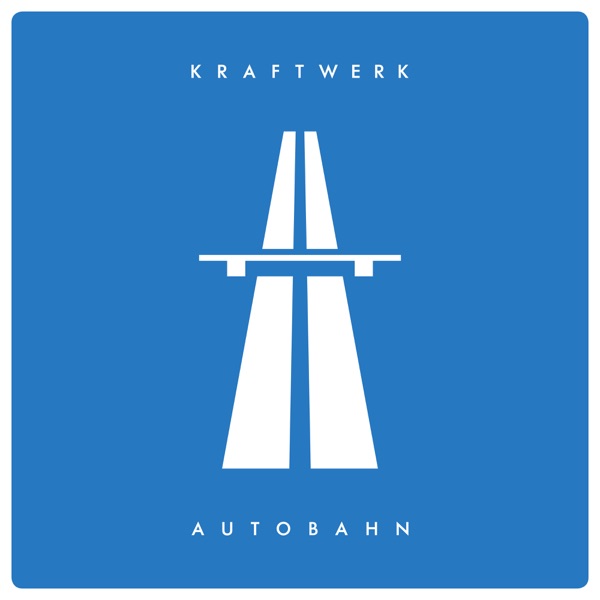
The 22-minute title track fills the whole first side, a drive down the motorway. This is Kraftwerk's turning point: experimental krautrock steps back, and synthesizers and drum machines take over in what became electropop; Detroit techno later named them as a source.
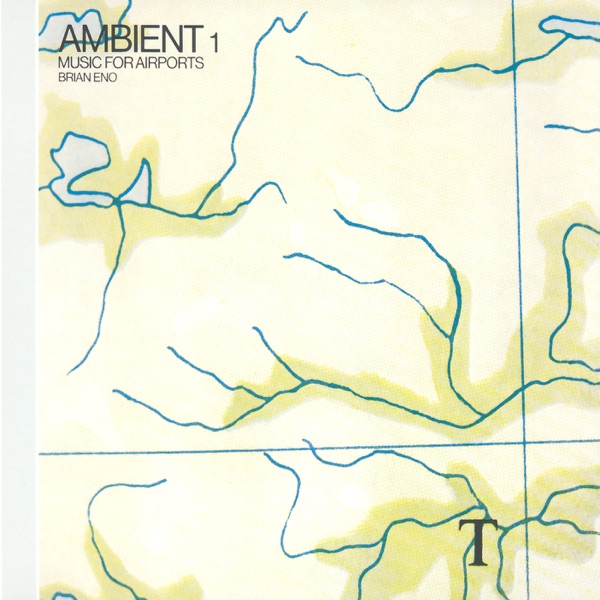
Start with "1/1": Robert Wyatt's piano falls a phrase at a time, with no beat pushing it along. Eno built the pieces from tape loops. Play it quietly, get on with something else, and let it pull you back now and then.
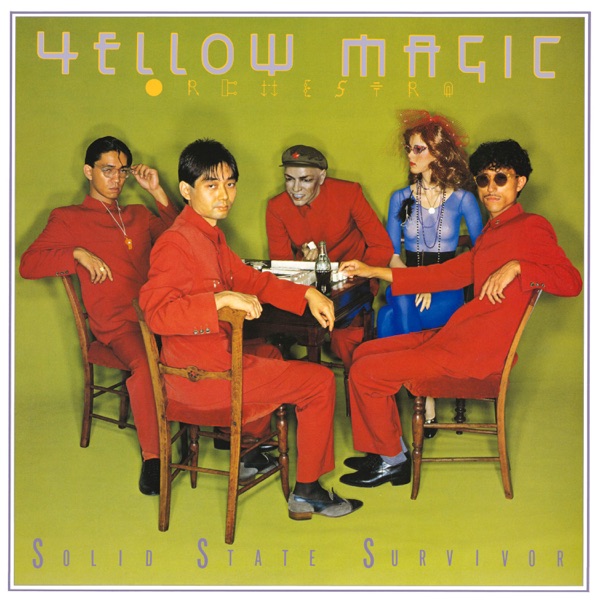
Start with "Technopolis" and "Rydeen". "Technopolis" is a tribute to Tokyo as an electronic city, with "techno" right in the title. "Behind the Mask" was first written for a Seiko quartz watch commercial; Michael Jackson later recorded his own version.
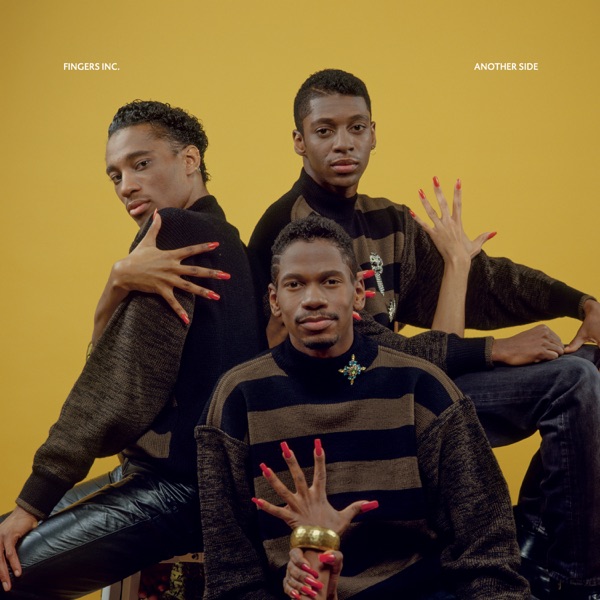
Often called the first full-length house album. Larry Heard handled production, keyboards and drum programming; Robert Owens and Ron Wilson sang. Start with "Never No More Lonely" and "Distant Planet" to hear the gentle, soulful side of house.
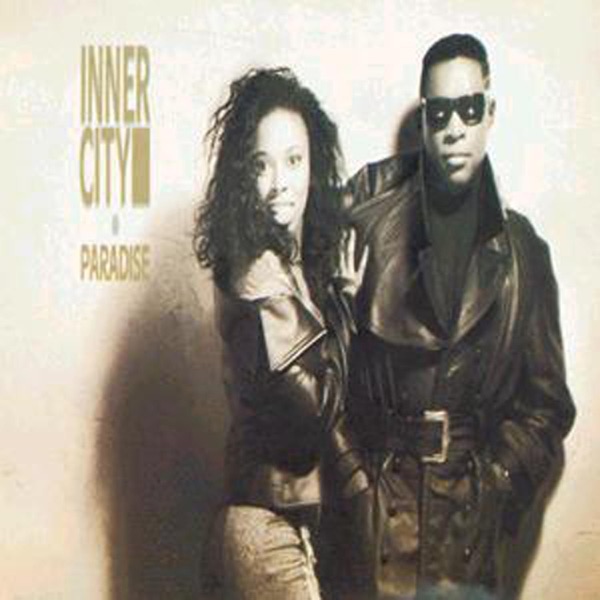
Produced by Kevin Saunderson of the Belleville Three and sung by Paris Grey, who was born near Chicago; Juan Atkins produced "And I Do". The US edition is titled Big Fun. Start with "Big Fun" and "Good Life", where Detroit's machine beat becomes songs you can sing along to.
The group's first album on ZTT. Start with "Pacific 202": a version of the same song reached number 10 on the UK Singles Chart in November 1989, just as acid house was entering the British mainstream.
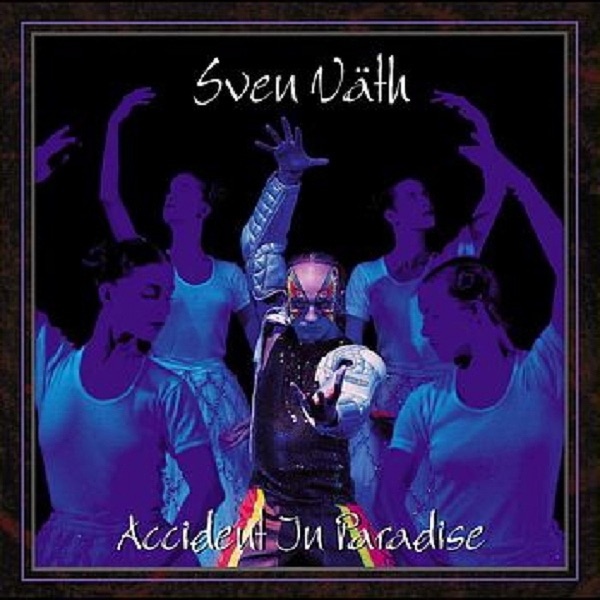
Released on Eye Q and produced by Väth with Ralf Hildenbeutel. The 13-minute opener "Ritual of Life" builds slowly and falls away, which is exactly how trance is put together; the single "L'Esperanza" is a good way in.
Tracks Richard D. James had been recording on cassette since he was 13 or 14, released in 1992 on Apollo, a subsidiary of R&S. Start with "Xtal" and "Ageispolis": there is a beat, but it is meant for headphones. It is widely seen as a classic of electronica, and it brought techno to many indie listeners.
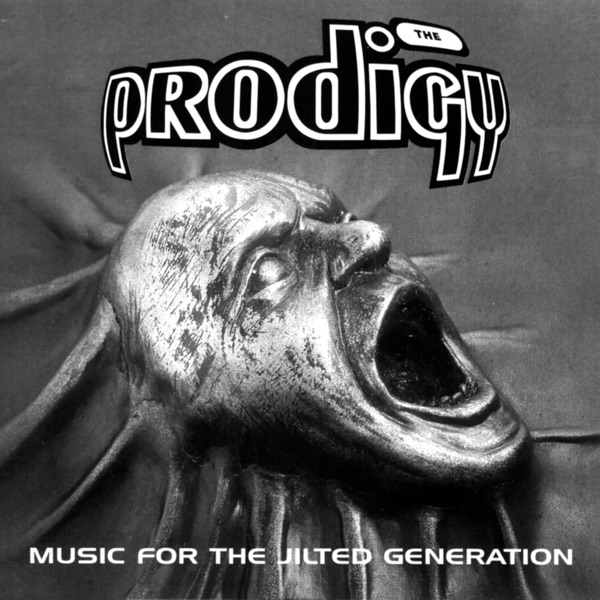
Released in July 1994, the year the UK's Criminal Justice and Public Order Act criminalised raves; the record is partly an answer to it. Start with "Voodoo People" and "No Good (Start the Dance)", where the breakbeats are fast and heavy.
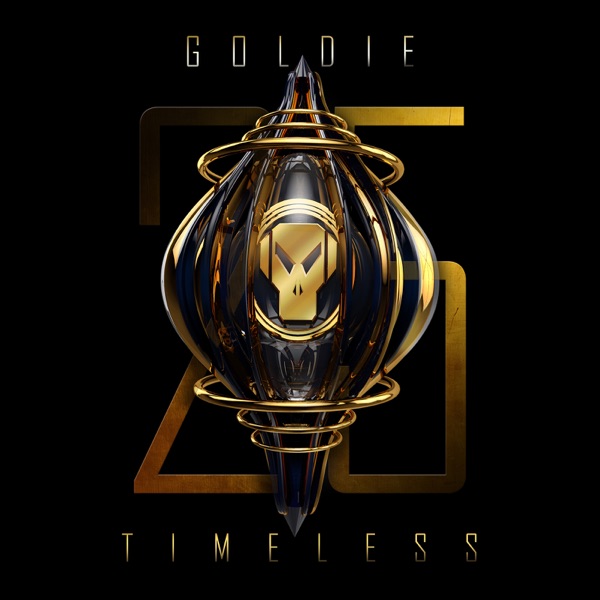
The 21-minute title track strings "Inner City Life", "Pressure" and "Jah" into one suite, with Diane Charlemagne's voice floating over the fast drums. Widely regarded as a groundbreaking drum and bass record; play it straight through from the top.
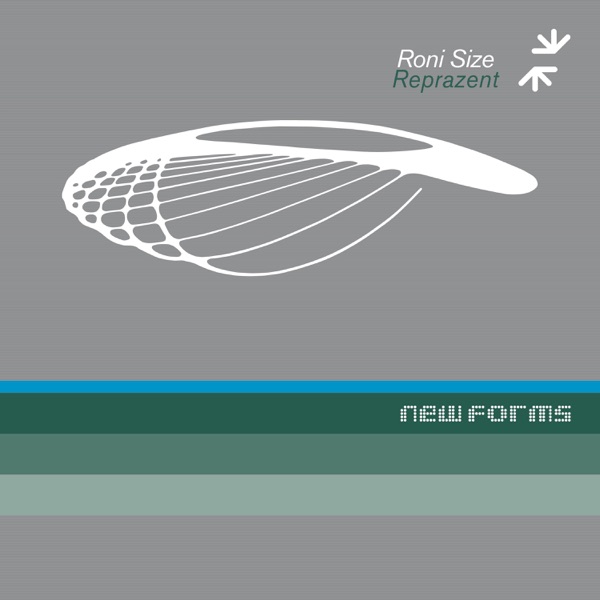
The drum and bass album that won the 1997 Mercury Prize, produced by Roni Size, DJ Die, Krust and Suv. Start with "Brown Paper Bag" and "Heroes" and listen for how the drums and bass become the whole subject of the song.

Released on Hyperdub in November 2007 and made in the audio editor Sound Forge. Start with "Archangel": pitch-shifted vocal samples over skipping 2-step drums, often heard as a tribute to UK garage. Best on your own, late at night.
Covers are the versions on Apple Music; a few are reissue covers that differ from the original release.
FAQ
Is electronic music the same as EDM? No. EDM is an umbrella for the dance genres made for clubs, raves and festivals, pushed as a market label in the US in the early 2010s. Electronic music is wider: it also includes the concert-music line that began in Paris and Cologne, and listening music such as ambient and IDM that was never written for a dancefloor.
How do I tell house from techno? Both are four-on-the-floor. House is from Chicago, close to disco, around 115–130 BPM, often with vocals and chords. Techno is from Detroit, 120–150 BPM, with rhythm and timbre valued over melody and vocals; the Roland TR-808 and TR-909 are its signature machines.
There are too many genre names — do I need them all? No. Keep the three questions (how the drums go, how fast, dance or listen) and the two lineages (four-on-the-floor and breakbeat), then add names as you listen, by where they sit in the lineage.
Sources
- Wikipedia (Japanese): 電子音楽, NHK電子音楽スタジオ, テクノポップ, イエロー・マジック・オーケストラ
- Wikipedia: Musique concrète, Pierre Schaeffer, Studio for Electronic Music (WDR)
- Wikipedia: House music, Frankie Knuckles, Acid house, Shoom, Techno, The Belleville Three, Trance music, Hardcore (electronic dance music genre)
- Wikipedia: Jungle music, Drum and bass, UK garage, Dubstep
- Wikipedia: Ambient music, Intelligent dance music, Electronica, Electronic dance music
- Album articles (Wikipedia): Autobahn, Ambient 1: Music for Airports, Solid State Survivor, Another Side, Paradise, 90, Accident in Paradise, Selected Ambient Works 85–92, Music for the Jilted Generation, Timeless, New Forms, Untrue